


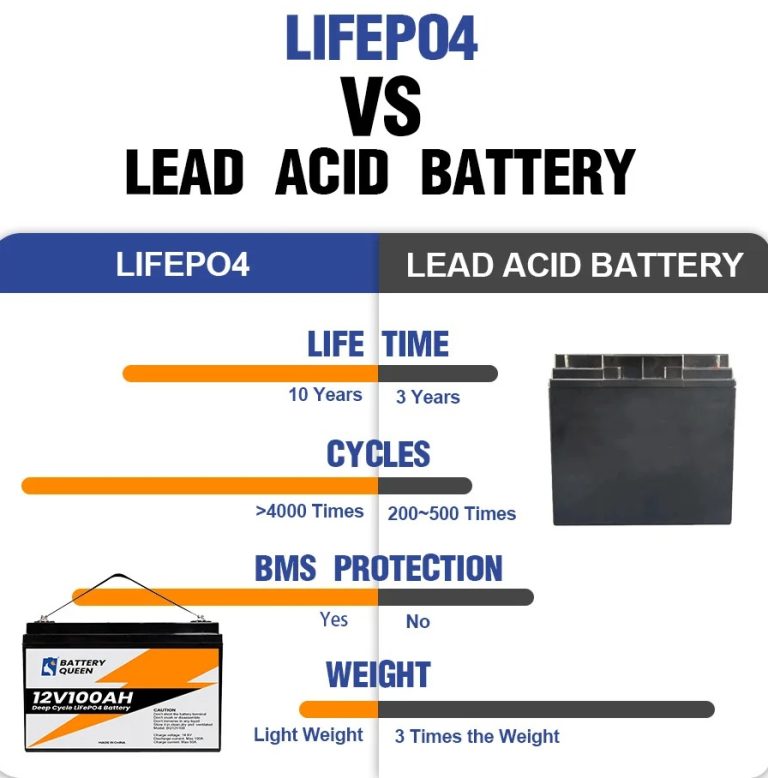
In the world of energy storage, choosing the right type of battery is crucial, especially for applications like solar energy storage, electric vehicles, or backup power systems. Two common options are Lead Acid batteries and Lithium Iron Phosphate (LiFePo4) batteries. While both serve the purpose of storing energy, there are significant differences between the two that make LiFePo4 batteries a far superior choice for most modern applications. This blog will dive into the differences between the two battery types and explain why LiFePo4 batteries are better.
1. Technology and Chemistry
Lead Acid Battery: The Lead Acid battery is one of the oldest battery technologies, using lead and sulfuric acid for its chemical reaction. It consists of lead dioxide as the cathode, sponge lead as the anode, and sulfuric acid as the electrolyte.
LiFePo4 Battery: Lithium Iron Phosphate (LiFePo4) batteries, on the other hand, belong to the lithium-ion family. They use a lithium iron phosphate cathode and a graphite carbon anode, offering a more advanced chemical composition.
Why LiFePo4 is Better: LiFePo4 technology is a newer and more efficient advancement compared to the dated lead-acid chemistry. The electrochemical performance of LiFePo4 is more robust, especially for modern, high-demand applications.
2. Energy Density
Lead Acid Battery: Lead Acid batteries have a relatively low energy density, typically around 30-50 Wh/kg. This means they require more physical space to store the same amount of energy.
LiFePo4 Battery: LiFePo4 batteries have a significantly higher energy density, around 90-160 Wh/kg. This allows them to store more energy in a smaller, lighter package.
Why LiFePo4 is Better: LiFePo4 batteries are more compact and lightweight, making them ideal for applications where space and weight are a concern, like electric vehicles or portable solar power storage.
3. Cycle Life
Lead Acid Battery: Lead Acid batteries typically last between 300-500 charge cycles before their capacity deteriorates to 80% of their original level.
LiFePo4 Battery: LiFePo4 batteries boast an impressive lifespan of 2000-5000 charge cycles while maintaining up to 80-90% capacity.
Why LiFePo4 is Better: The long cycle life of LiFePo4 batteries translates into reduced maintenance and replacement costs over time, providing better value and sustainability.
4. Efficiency
Lead Acid Battery: Lead Acid batteries have a lower efficiency, with around 70-80% of the stored energy being available during discharge.
LiFePo4 Battery: LiFePo4 batteries offer superior efficiency, with a discharge efficiency of over 95%.
Why LiFePo4 is Better: Higher efficiency in LiFePo4 batteries means more of the stored energy can be utilized, reducing energy waste and improving overall system performance.
5. Depth of Discharge (DoD)
Lead Acid Battery: These batteries typically have a usable Depth of Discharge (DoD) of 50%, meaning you can only safely use about half of the stored energy without significantly shortening the battery’s lifespan.
LiFePo4 Battery: LiFePo4 batteries can safely discharge up to 90-100% without harming the battery’s longevity.
Why LiFePo4 is Better: A higher DoD means more energy can be used from LiFePo4 batteries, providing a higher usable capacity.
6. Maintenance
Lead Acid Battery: These batteries require regular maintenance such as checking water levels and equalizing charges to prevent sulfation and extend lifespan.
LiFePo4 Battery: LiFePo4 batteries are virtually maintenance-free. They do not require any water refills or periodic checks.
Why LiFePo4 is Better: The lack of required maintenance makes LiFePo4 batteries more convenient for users, reducing labor and time spent on upkeep.
7. Safety
Lead Acid Battery: Lead Acid batteries pose safety risks like acid leaks and hydrogen gas release, which can lead to corrosion or explosions if not handled properly.
LiFePo4 Battery: LiFePo4 batteries are much safer due to their stable chemistry. They are less likely to overheat, and they don’t pose a risk of catching fire.
Why LiFePo4 is Better: The increased safety of LiFePo4 batteries makes them a more secure option, particularly in residential or mobile applications.
8. Environmental Impact
Lead Acid Battery: Lead and sulfuric acid are toxic and pose a significant environmental hazard. Proper disposal and recycling are critical but not always followed.
LiFePo4 Battery: LiFePo4 batteries are much more environmentally friendly. They do not contain harmful heavy metals like lead or cadmium.
Why LiFePo4 is Better: LiFePo4 batteries have a lower environmental footprint, making them a greener choice for sustainable energy systems.
Comparison Chart (Point-Wise)
| Aspect | Lead Acid Battery | LiFePo4 Battery |
|---|---|---|
| Energy Density | 30-50 Wh/kg | 90-160 Wh/kg |
| Cycle Life | 300-500 cycles | 2000-5000 cycles |
| Efficiency | 70-80% | 95%+ |
| Depth of Discharge (DoD) | 50% | 90-100% |
| Maintenance | High (water levels, equalization) | Virtually maintenance-free |
| Weight | Heavy | Lightweight |
| Safety | Risk of acid leaks and explosions | Stable, no risk of fire |
| Environmental Impact | Toxic, lead and acid content | Eco-friendly, no heavy metals |
In conclusion, LiFePo4 batteries offer significant advantages over Lead Acid batteries in almost every category, making them the superior choice for modern energy storage systems. Their longer lifespan, higher efficiency, greater safety, and minimal maintenance requirements ensure that they deliver better performance and value in the long term.