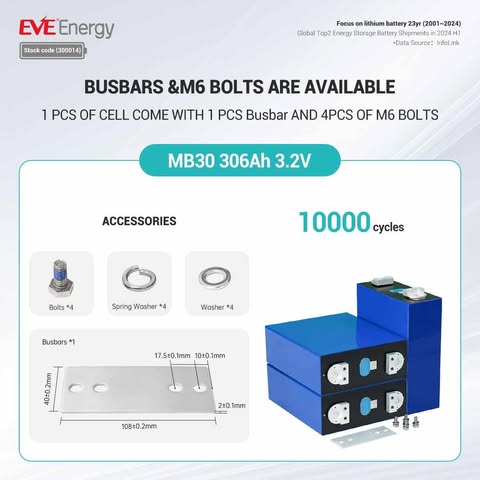
Lithium Phosphate Test Reports
Lithium Phosphate Test Reports




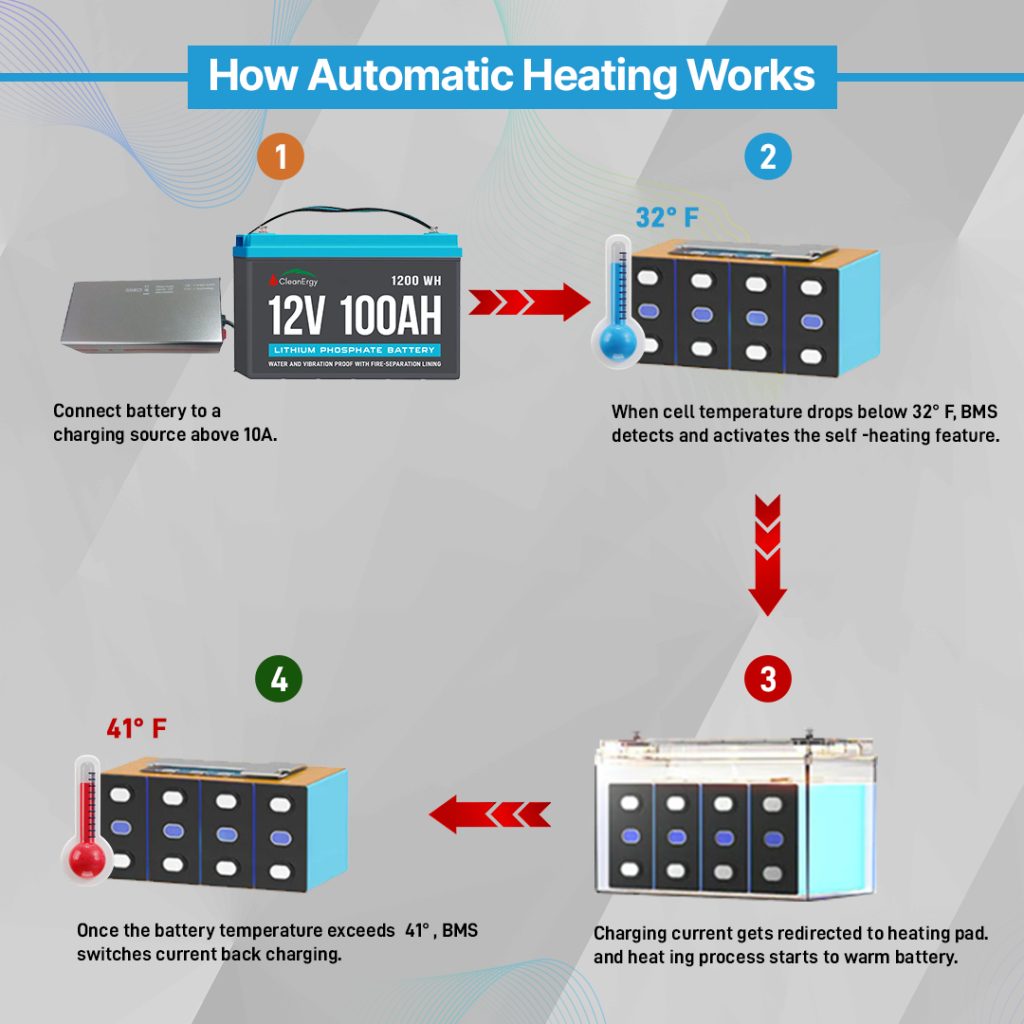
How Automatic Heating Keeps Your Battery Running Smoothly in Cold Weather Have you ever wondered how your battery continues to function smoothly in freezing temperatures? Well, it’s all due to automated heating! This smart feature activates when it becomes too cold, keeping your battery heated and ready to go. Let’s look at how it works to keep you powered up regardless of the weather! How It Works: Connection to Charging Source:The battery connects to a charging source with a current above 10A, allowing the system to operate. Temperature Detection:When the battery cell temperature drops below 32°F (0°C), the BMS (Battery Management System) detects the low temperature. Self-Heating Activation:The BMS activates the self-heating feature, redirecting the charging current to the heating pad. Heating Process:The heating pad warms the battery until the temperature exceeds 41°F (5°C). Resuming Charging:Once the battery reaches 41°F, the BMS switches the current back to the charging process, ensuring safe and efficient power flow. In conclusion, This automatic heating process prevents damage, enhances performance, and ensures your battery operates smoothly, even in freezing conditions. So, what are you waiting for? Connect with us to know more.
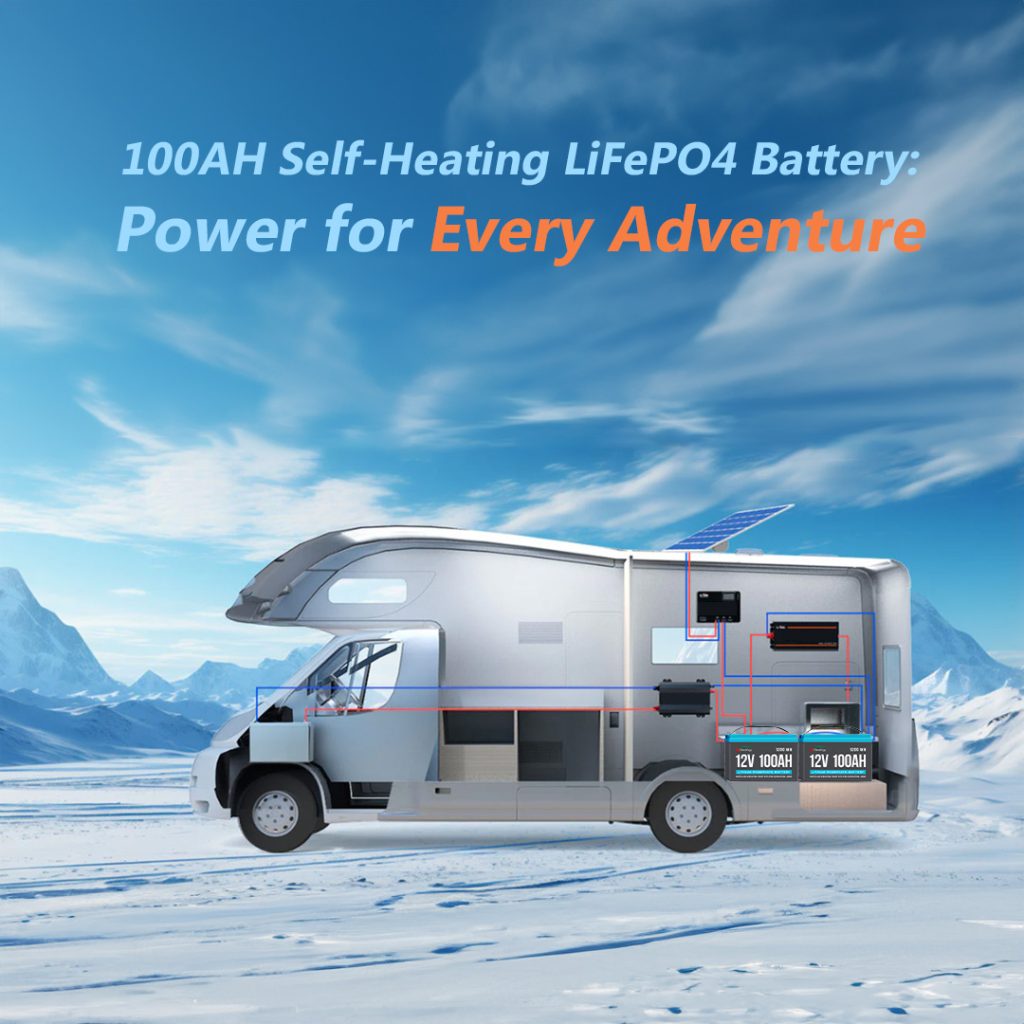
Tired of your battery dropping charge in the cold? The 100AH Self-Heating LiFePO4 Battery aims to change that! Whether you’re off-grid, on a boat, or installing a solar system, this battery keeps you going even in frigid weather. Let’s look at how this game-changing technology assures you never run out of energy, no matter where your journey takes you! Self-Heating Technology: A built-in heating device keeps the battery warm and functional even in frigid weather. Versatile Applications: Versatile applications include solar systems, yachts, and off-grid cabins for reliable power in distant areas. Reliable Power: With a capacity of 100AH, this battery provides enough power for your gadgets and systems. Durable and Safe: LiFePO4 technology offers long-lasting durability, improved safety, and requires less maintenance. This battery is ideal for consumers who require a consistent energy supply in every condition, keeping their electronics working smoothly all year.
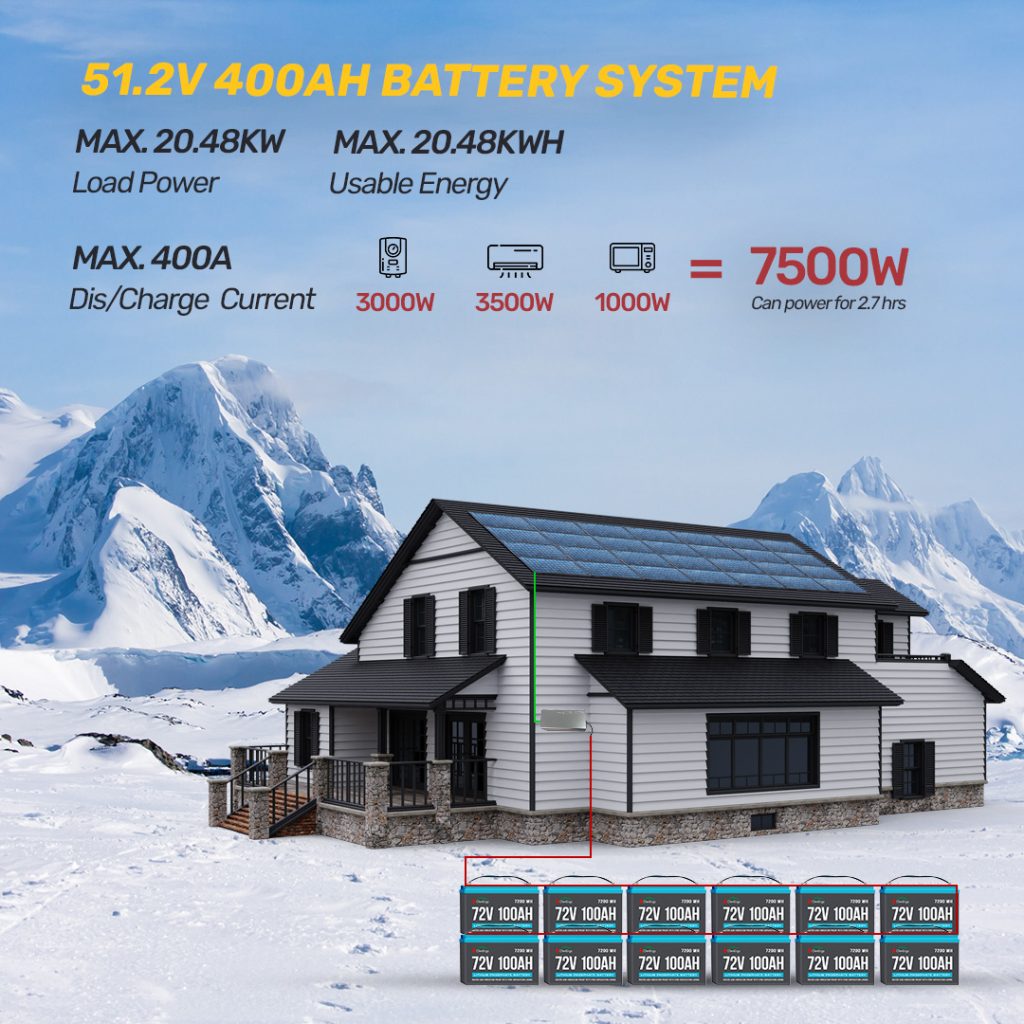
Are you looking for a reliable and robust energy storage solution? The 51.2V 400AH Battery System provides exactly that, providing high-capacity storage and reliable power production to match the demands of current consumption of energy. Whether you’re powering your house, office, or industrial equipment, this system is built to be efficient and reliable. Key features: Voltage and Capacity: The system’s 51.2V voltage and 400Ah capacity provide ample energy storage for your needs. High Power Output: This system’s 20.48kW power output allows for simultaneous powering of many devices or equipment. Usable Energy: It provides 20.48kWh of usable energy, guaranteeing effective energy delivery for long periods. Fast Charging: With a 400A charge current, it enables quick recharging to reduce downtime. Long runtime: Ability to run a 20.48kW load for 2.7 hours, ensuring consistent performance under power needs. This innovative battery technology is ideal for medium- to large-scale energy storage and offers an environmentally responsible, cost-effective alternative to conventional power systems. It’s a crucial component for any arrangement that requires efficient, long-term energy storage.

When it comes to powering our electronic devices and automobiles, lithium-ion batteries have long been the preferred choice. But a new rival is making waves: sodium-ion batteries. As the world seeks more ecological and cost-effective energy options, sodium-ion batteries are up to the task. So, how do these two compare to each other? Let’s look at their significant distinctions and determine which one could be the future of energy storage. Key differences: Abundant Materials: Sodium is much more abundant and widely available than lithium, making it a more sustainable choice. Environmental Impact: Sodium is more environmentally friendly than lithium since its mining leaves a less ecological footprint. Cost: Sodium-ion batteries are much less expensive than lithium-ion batteries due to the lower cost of sodium. Operating temperature: Lithium-ion batteries have a greater operating temperature, making them more suitable for harsh environments. Charging Speed: Lithium-ion batteries often charge faster than sodium-ion batteries. To summarize, while sodium-ion batteries provide a more sustainable, cost-effective alternative with ample resources and environmental benefits, lithium-ion batteries continue to lead in performance, charging speed, and high-temperature operation. As technology progresses, sodium-ion batteries may become a feasible alternative for a broader range of applications, but lithium-ion batteries remain the preferred choice in many energy storage systems.
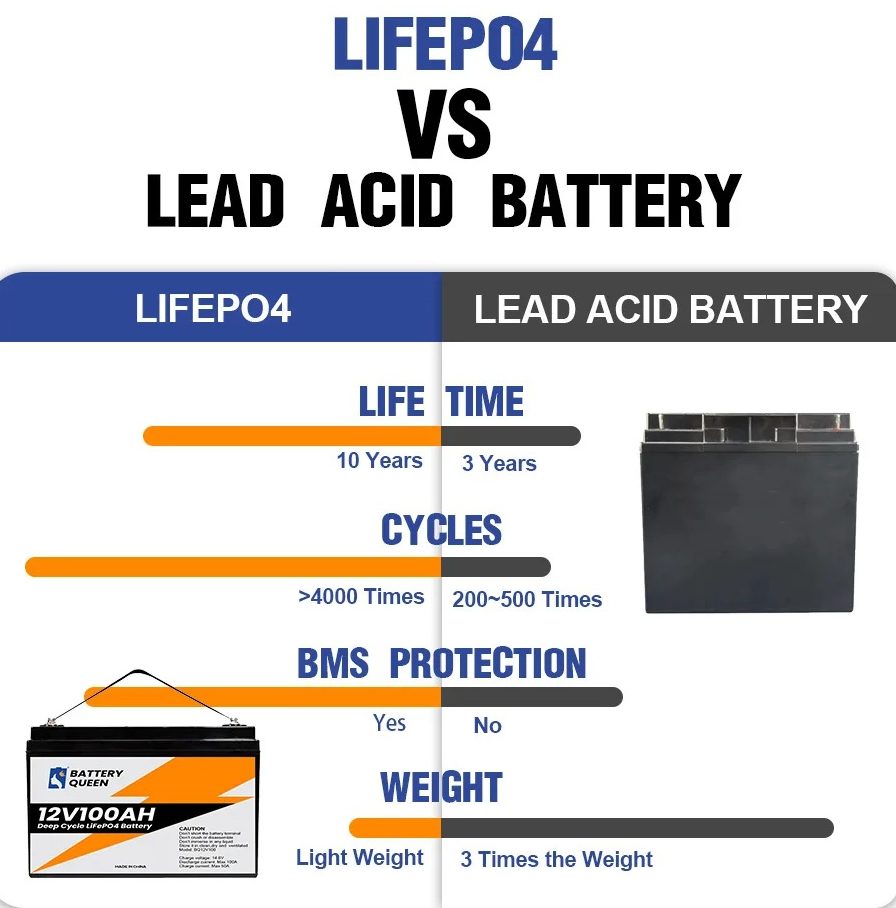
In the world of energy storage, choosing the right type of battery is crucial, especially for applications like solar energy storage, electric vehicles, or backup power systems. Two common options are Lead Acid batteries and Lithium Iron Phosphate (LiFePo4) batteries. While both serve the purpose of storing energy, there are significant differences between the two that make LiFePo4 batteries a far superior choice for most modern applications. This blog will dive into the differences between the two battery types and explain why LiFePo4 batteries are better. 1. Technology and Chemistry Lead Acid Battery: The Lead Acid battery is one of the oldest battery technologies, using lead and sulfuric acid for its chemical reaction. It consists of lead dioxide as the cathode, sponge lead as the anode, and sulfuric acid as the electrolyte. LiFePo4 Battery: Lithium Iron Phosphate (LiFePo4) batteries, on the other hand, belong to the lithium-ion family. They use a lithium iron phosphate cathode and a graphite carbon anode, offering a more advanced chemical composition. Why LiFePo4 is Better: LiFePo4 technology is a newer and more efficient advancement compared to the dated lead-acid chemistry. The electrochemical performance of LiFePo4 is more robust, especially for modern, high-demand applications. 2. Energy Density Lead Acid Battery: Lead Acid batteries have a relatively low energy density, typically around 30-50 Wh/kg. This means they require more physical space to store the same amount of energy. LiFePo4 Battery: LiFePo4 batteries have a significantly higher energy density, around 90-160 Wh/kg. This allows them to store more energy in a smaller, lighter package. Why LiFePo4 is Better: LiFePo4 batteries are more compact and lightweight, making them ideal for applications where space and weight are a concern, like electric vehicles or portable solar power storage. 3. Cycle Life Lead Acid Battery: Lead Acid batteries typically last between 300-500 charge cycles before their capacity deteriorates to 80% of their original level. LiFePo4 Battery: LiFePo4 batteries boast an impressive lifespan of 2000-5000 charge cycles while maintaining up to 80-90% capacity. Why LiFePo4 is Better: The long cycle life of LiFePo4 batteries translates into reduced maintenance and replacement costs over time, providing better value and sustainability. 4. Efficiency Lead Acid Battery: Lead Acid batteries have a lower efficiency, with around 70-80% of the stored energy being available during discharge. LiFePo4 Battery: LiFePo4 batteries offer superior efficiency, with a discharge efficiency of over 95%. Why LiFePo4 is Better: Higher efficiency in LiFePo4 batteries means more of the stored energy can be utilized, reducing energy waste and improving overall system performance. 5. Depth of Discharge (DoD) Lead Acid Battery: These batteries typically have a usable Depth of Discharge (DoD) of 50%, meaning you can only safely use about half of the stored energy without significantly shortening the battery’s lifespan. LiFePo4 Battery: LiFePo4 batteries can safely discharge up to 90-100% without harming the battery’s longevity. Why LiFePo4 is Better: A higher DoD means more energy can be used from LiFePo4 batteries, providing a higher usable capacity. 6. Maintenance Lead Acid Battery: These batteries require regular maintenance such as checking water levels and equalizing charges to prevent sulfation and extend lifespan. LiFePo4 Battery: LiFePo4 batteries are virtually maintenance-free. They do not require any water refills or periodic checks. Why LiFePo4 is Better: The lack of required maintenance makes LiFePo4 batteries more convenient for users, reducing labor and time spent on upkeep. 7. Safety Lead Acid Battery: Lead Acid batteries pose safety risks like acid leaks and hydrogen gas release, which can lead to corrosion or explosions if not handled properly. LiFePo4 Battery: LiFePo4 batteries are much safer due to their stable chemistry. They are less likely to overheat, and they don’t pose a risk of catching fire. Why LiFePo4 is Better: The increased safety of LiFePo4 batteries makes them a more secure option, particularly in residential or mobile applications. 8. Environmental Impact Lead Acid Battery: Lead and sulfuric acid are toxic and pose a significant environmental hazard. Proper disposal and recycling are critical but not always followed. LiFePo4 Battery: LiFePo4 batteries are much more environmentally friendly. They do not contain harmful heavy metals like lead or cadmium. Why LiFePo4 is Better: LiFePo4 batteries have a lower environmental footprint, making them a greener choice for sustainable energy systems. Comparison Chart (Point-Wise) Aspect Lead Acid Battery LiFePo4 Battery Energy Density 30-50 Wh/kg 90-160 Wh/kg Cycle Life 300-500 cycles 2000-5000 cycles Efficiency 70-80% 95%+ Depth of Discharge (DoD) 50% 90-100% Maintenance High (water levels, equalization) Virtually maintenance-free Weight Heavy Lightweight Safety Risk of acid leaks and explosions Stable, no risk of fire Environmental Impact Toxic, lead and acid content Eco-friendly, no heavy metals In conclusion, LiFePo4 batteries offer significant advantages over Lead Acid batteries in almost every category, making them the superior choice for modern energy storage systems. Their longer lifespan, higher efficiency, greater safety, and minimal maintenance requirements ensure that they deliver better performance and value in the long term.